
E-mail:
qyszhjx@163.comCall Us:
+86-391-5935000
Paper processing machine is subsequent process equipment after slitter rewinder in paper production,processing machine could process jumbo roll paper to finished product that customer's demand.There are toilet paper processing machine,A4 paper processing machine.
Paper making machine is a set of machine that is used to manufacture all kinds of papers, such as toilet paper, tissue paper, A4 paper, napkin paper, etc. The machine mainly consists of three parts: net, squeezing, heating drying and so on. The net part has two types: fourdrinier wire and cylinder mould. The squeezing part contains press roll and papermaker’s felt. The drying part includes one or various of dryer. All the parts of we adopt the first class material and advanced technology.
Increased Production Efficiency
Paper Processing Machine are designed with advanced technology to ensure they can produce high volumes of toilet paper quickly. This led to greater production efficiency and reduced downtime.
Better Quality
A Paper Processing Machine will produce consistent quality and uniform thickness. This ensures that your customers are satisfied with your product's quality and helps build your brand reputation.
Cost Savings
Investing in a Paper Processing Machine may have a higher upfront cost, but it can save you money in the long run. This is because these machines are designed with energy-efficient features that can reduce your energy consumption and operational costs.
Versatility
Paper Processing Machine are versatile and can produce a wide range of products, including standard, jumbo, and industrial rolls. This allows you to diversify your product offerings and reach a wider customer base.
Durability
Paper Processing Machine are built to last and are designed with high-quality materials that can withstand heavy use. This ensures your machine will last longer and require fewer repairs, leading to further cost savings.

Paper cutters cut a stack of paper in one motion. Most paper cutters can cut a ream or more of paper at once. You can make the cut nearly anywhere on the paper. Trimmers are cutters that only trim the edge of the paper.
Read More
Facial Tissue Paper Machine is a box-drawing facial tissue machine to cut a good plate of paper folded into the process 'V'ype of paper processing equipment, machinery, and mechanical hand using vacuum-assisted folding principle.
Read More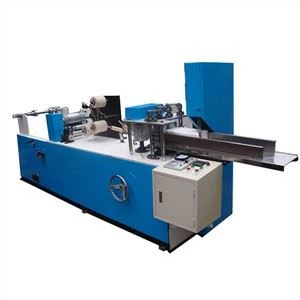
Napkin Folding Machine is designed to automatically fold the paper towel into a square or rectangular open style after cutting the embossed bobbin.
Read More
Napkin machine is used for jumbo roll tissue paper embossing, folding, electronic counting, cutting and processing into a square napkin. It could emboss and fold automatically in the process production, no need manual folding.
Read More
A4 paper cutting machine is specialist for horizontal and vertical cutting paper rolling materials to A4, A3, A2 size etc. The slitting machine could be with 1 roll, 2rolls or 4 rolls according to customer's or market requirement.
Read More
Our Factory
Qinyang City Zhenghua Paper Machinery CO., Ltd is located in Qinyang City, Henan province, China, is a collection of scientific research, design, manufacturing, marketing and service in one of the large-scale papermaking equipment enterprises.
Our Product
The company mainly manufacture all kinds of high-strength corrugated / linerboard machine (used in the production of various types of paper packaging), culture paper machine for the production of printing paper/ A4 paper, toilet paper machine for the production of high-grade household paper, napkins, paper towels etc, special paper making machine include mosquito coil making machine,insole board paper making machine,recycled leather making machine and could supply all kinds of paper making pulping equipment and the spare parts for paper machine.
Main Market
We ensure that our paper machines are of high quality,right mix of quality and price is what we offer to our customer.We have customers from both domestic market and oversea market,main sales market:middle east area,Africa,southeast Asia etc,welcome customers to contact us.
Our Service
The company has first-class sales and technical service team, according to customer requirements to provide project design, process design and technical training, etc.. We provide a pre-sale, sale, the after-sales tracking service, fully eliminate the worries of the majority of customers.Pre-sale service,supply detailed drawing and technical scheme,provide complete and professional consultation service;after-sale service,send professional installation technician to guide machine installation,and provide technical training for your workers.
The main reason is that after the puree comes out of the headbox, it is evenly spread on the net cloth, and the net cloth is driven by the breast roller and the flat roller. There are wipers (before the water line) and the vacuum suction box (water) under the net cloth. After the line), this part is collectively referred to as the wire part; after that is the press part, which includes several pairs of press rolls to squeeze up and down for dehydration; the sub-press is not finished, the drying part, with dozens of drying cylinders and guide rolls to adjust the blanket angle To adjust the contact area between the drying cylinder and the wet paper sheet; Then to the sizing roller, there are usually a pair, and then several pairs of drying cylinders are usually installed for drying and dewatering; The calendering roller, the last process, the upper and lower surfaces are calendered You can roll the paper, and roll it into the finished paper you need.
Raw material preparation:The first step in papermaking is to prepare raw materials. This may include harvesting trees for wood pulp, collecting recycled paper or preparing cotton or other fibers.
Pulping:After the raw material is collected, it is pulped. This process breaks down the fibers into a pulp ready for processing.
Clean:After pulping, the pulp is cleaned to remove any contaminants or impurities such as dirt or bark.
Refining:The pulp is then refined to create a consistent texture and increase the strength of the paper.
Additive:Various additives, such as sizing agents or fillers, can be added to the pulp to improve the properties of the paper.
Forming:The slurry is then formed into sheets or coils using various methods including Fourdrinier, Cylinder or Twin Wire formers.
Press:The formed sheet or roll is then pressed to remove excess water and increase the density of the paper.
Dry:The paper is then dried using heated rollers or passed through a series of dryers.
Tidy:The finished paper may undergo additional treatments, such as calendering or coating, to improve its properties and appearance.

Single die vs. double die vs. multiple die
A business can choose a single, double, or multiple die paper product-making machine. This choice depends on the product quantity and the speed at which the business wants to produce its paper products. Double and multiple die paper product machines are often used in large-scale production at a reduced manufacturing cost, whereas single die is suitable for small operations.
Production capacity
Production capacity is the number of plates the machine produces per hour. It varies depending on the machine's number of dies, plate size, and motor power. A business intending to produce large-scale paper products will purchase machinery with larger plate sizes, multiple dies, and high motor power.
Lifespan
Paper product machines are a huge investment, and entrepreneurs want to see a high ROI. Return on investments depends on the quality and lifespan of the paper product machinery. The longer it stays operational without technical glitches or collapse, the more profitable it is. The purchasing company could look for machines with longer warranties.
Paper specification
Paper products come in different sizes and thicknesses, meaning the company should purchase suitable paper product-making machines that can accommodate various paper specifications. An automatic machine is an example of equipment that can produce paper plates of varied thicknesses and sizes without regulators and buttons. The machines' automatic nature reduces labor costs since minimal human touch is required in operating and maintaining them. Modern paper product-making machines can be customized to accommodate different paper sizes such as A4, A3, A2, and A5 with varied thicknesses and weights.
Quality of the machine
A business can grow to the next level if the owners invest in a paper product-making machine since it reduces costs and enhances productivity. A company wanting to invest in paper product machinery should ensure they buy a quality machine. Consider some points to remember:
Ensure the machine is built with high-quality raw material to prevent unnecessary losses.
Confirm whether the machine is working to see if it boosts the business's performance.
The company should also ensure that the product has a mark of standard or quality from the responsible bureau.
After-sale service
Operating a machine comes with its challenges, and a new business owner may not have all the technical skills needed to run it efficiently. The purchasing company should inquire whether the manufacturer offers technical support or installations. It will be unwise to purchase a complex machine with no after-sales service to enlighten users on installation, operations, and maintenance.
Price
Though the price is dictated by production capacity and features, budget evaluation is part of an entrepreneur's decision-making. The business will conduct a cost-benefit analysis to evaluate which paper product-making machinery to invest in. The level of operations also dictates the type of machine and cost. A business that wants to produce many paper products will benefit by investing in a bigger machine, which could cost more.

Precautions For Installation
Precautions For Adjustment
1. Lubrication of pulp machinery
Pulp machinery includes two types of equipment: material preparation and pulping. The lubrication characteristics of pulp machinery are that the working environment is humid, high temperature, and impact load.
Generally, it is required to have good heat resistance, oxidation resistance, anti-emulsification and rust resistance, etc., and the anti-oxidative and anti-rust lubricating oil with a viscosity of 46-100. There are also No. 2 or No. 3 complex calcium-based, sodium-based or lithium-based greases with good heat resistance and mechanical stability, and even molybdenum disulfide or graphite greases.
The bearings and gears of pulp cooking equipment have high operating temperatures and are often lubricated with industrial gear oil or grease.
Summarize the lubricating parts of pulp machinery include bearings, worm gears, reducers, closed and open gears, L-HL hydraulic oil, L-CkC industrial gear oil, calcium-based grease, complex calcium-based grease, general lithium types of base grease, graphite calcium base grease and semi-fluid lithium base grease.
2. Lubrication of Paper Making Machine
In principle, the lubrication points of paper machines are all closed. Each bearing in the wet section of the paper machine has a sealed bearing housing to prevent cross contamination from intrusion and grease spillage. In the dry section of the paper machine, due to the high temperature during operation, the central lubrication station is used to transport lubricating oil to the bearings everywhere for lubrication and heat dissipation.
Summarize the lubricating parts of the paper machine are the transmission reduction box, the worm gear reduction box, the general sliding bearing, the rolling bearing, the exhaust fan, the wet section rolling bearing, the steel wire rope and the oil for the central lubrication station (dry section lubrication). The oils and greases that have been involved include hydraulic oil, total loss system oil, calcium-based grease, sodium-based grease, graphite calcium-based grease and other types.
3. Lubrication of paper machine and its ancillary equipment
(1) Sub-transmission reduction box, oil for central lubrication station (dry section lubrication), shaking box, worm gear reduction box, general sliding bearing: All use hydraulic oil or L-HL46 or L-AN46 for total loss system oil lubrication. The viscosity of the oil is 41.4~50.6mm2/s at 40°C, the flash point (opening) is >180°C, and the freezing point is <-10°C.
(2) Rolling bearings in wet section: Calcium-based grease, dropping point>80℃, cone penetration (25℃, 1/10mm) 265~295.
(3) Exhaust fan, rolling bearings in hot and humid places: Sodium-based grease, dropping point>40℃, cone penetration (25℃, 1/10mm) 220~250.
(4) Steel wire rope: Graphite calcium based grease, ZG-S, dropping point>80℃.
Failure Analysis of Paper Processing Machine
Paper processing machine failure mainly includes two aspects: one is inherent production failure and shutdown. The second is equipment failure and shutdown. In the production process of the paper machine, there is a certain degree of particularity and complexity.
1.Equipment fault shutdown characteristics
(1) There are many equipment failure points, often accompanied by equipment failure and shutdown.
(2) The service life of some parts is short and the replacement frequency of spare parts is high.
(3) There is a large gap between the failure cycle and the maintenance time occupied, which makes it difficult to manage.
2. The main reason for the failure of Paper processing machine
(1) Wear and tear. It mainly includes parts and equipment that are in long-term contact with copper mesh, pulp, felt or forming paper, such as pulp, slurry pump, vacuum box board, desander, calender, press roll, etc. Another reason is the frequent movement of parts, such as air intake covers, vacuum booster rollers, scrapers, cylinders and vacuum pumps.
(2) Lubrication. Mechanical rotation is directly related to the bearing. In paper machines, there are more types and numbers of rolls, with rotating rolls and hundreds of bearings of different types. Therefore, lubrication management is very necessary, especially affected by water, heavy load and high temperature. Lubricating oil is easy to evaporate, lose and age, causing damage and wear of the shaft bearing. Therefore, it is extremely necessary to check and refuel regularly.
(3) Fatigue. Heavy load and continuous operation of machinery are prone to fatigue damage. In the paper machine, because some parts are restricted by the mechanical structure and working principle, the parts cannot have too strong design strength to avoid damage, which can be solved through maintenance and technical transformation.
Keep Dust At Bay
Keep a Maintenance Schedule
Inspect Regularly
All equipment, machines, and devices used in the pulp and paper manufacturing process should be inspected regularly. Administrative staff should regularly inspect every item to check for wear and tear or other problems that need to be addressed. Expert servicemen should be hired to inspect equipment on a bi-annual or annual basis for a more detailed and in-depth check that all systems are working as they should. This allows you to catch problems before they get out of hand or cause production downtime.
Effective Employee Training
